Coax pushed further
Docsis 3.1 and its successor squeeze gigabit-class performance from plant that was built to carry television.
01The infrastructure already exists
Hybrid fibre-coax — the cable industry's preferred architecture since the 1990s — was never designed to compete with fibre-to-the-premises. Optical fibre runs from the headend to a node serving hundreds of homes; from there, coaxial cable carries signal the final stretch over what engineers call the distribution network. That coax is old, it is lossy, and it was sized for broadcast television, not symmetrical broadband. And yet it passes more homes in many developed markets than any fibre network does today. The question operators have spent the past decade answering is how much further it can be pushed before the economics of replacement win.
The answer, provisionally, is quite far. Docsis 3.1, standardised by CableLabs in 2013 and deployed commercially from around 2016, moved the downstream channel plan up to 1.2 GHz and adopted OFDM modulation with 4096-QAM, lifting theoretical downstream capacity well past a gigabit on a single node. Upstream remained the bigger constraint — legacy plant allocates only the sub-42 MHz band for upstream traffic, and that spectrum is noisy. Docsis 3.1 allowed upstream to extend to 204 MHz, though most implementations stopped at 85 MHz but the full benefit required amplifier and tap replacements that many operators deferred.
Docsis 4.0 addresses this directly. It defines two physical-layer variants: Extended Spectrum DOCSIS, which pushes the upstream to 684 MHz while the downstream occupies up to 1.8 GHz; and Full Duplex DOCSIS, which attempts to run upstream and downstream simultaneously across a shared spectrum block using interference cancellation. Full Duplex demands a node architecture where the optical-to-coax boundary sits very close to the customer — effectively node-plus-zero, with no amplifiers between node and tap — and that is where the civil work concentrates. Every amplifier cascade removed from the plant is both a capital expenditure and a point of signal degradation eliminated.
02Fibre deep, coax short
The practical strategy is to push fibre ever closer to the home while preserving the final coax drop. Node splitting — dividing a legacy node serving 500 homes into nodes of 125 or fewer — shrinks the amplifier chain and concentrates spectrum on fewer subscribers, raising usable throughput per home without touching the drop cable. When the fibre reaches a remotely-powered amplifier location, the segment being served collapses to a handful of homes and the performance gap with point-to-point fibre narrows substantially.
Some operators call this N+0 architecture: no active amplifiers between the optical node and the coaxial taps. The final coax run is often under 100 metres, which is a distance well within the physical capability of Docsis 4.0 to support multi-gigabit symmetrical service. Latency falls too — fewer amplifiers means fewer sources of group-delay distortion, and Docsis 3.1 introduced Low Latency DOCSIS, a scheduling mechanism that lets time-sensitive traffic queue-jump without sacrificing efficiency.
03What limits the upgrade
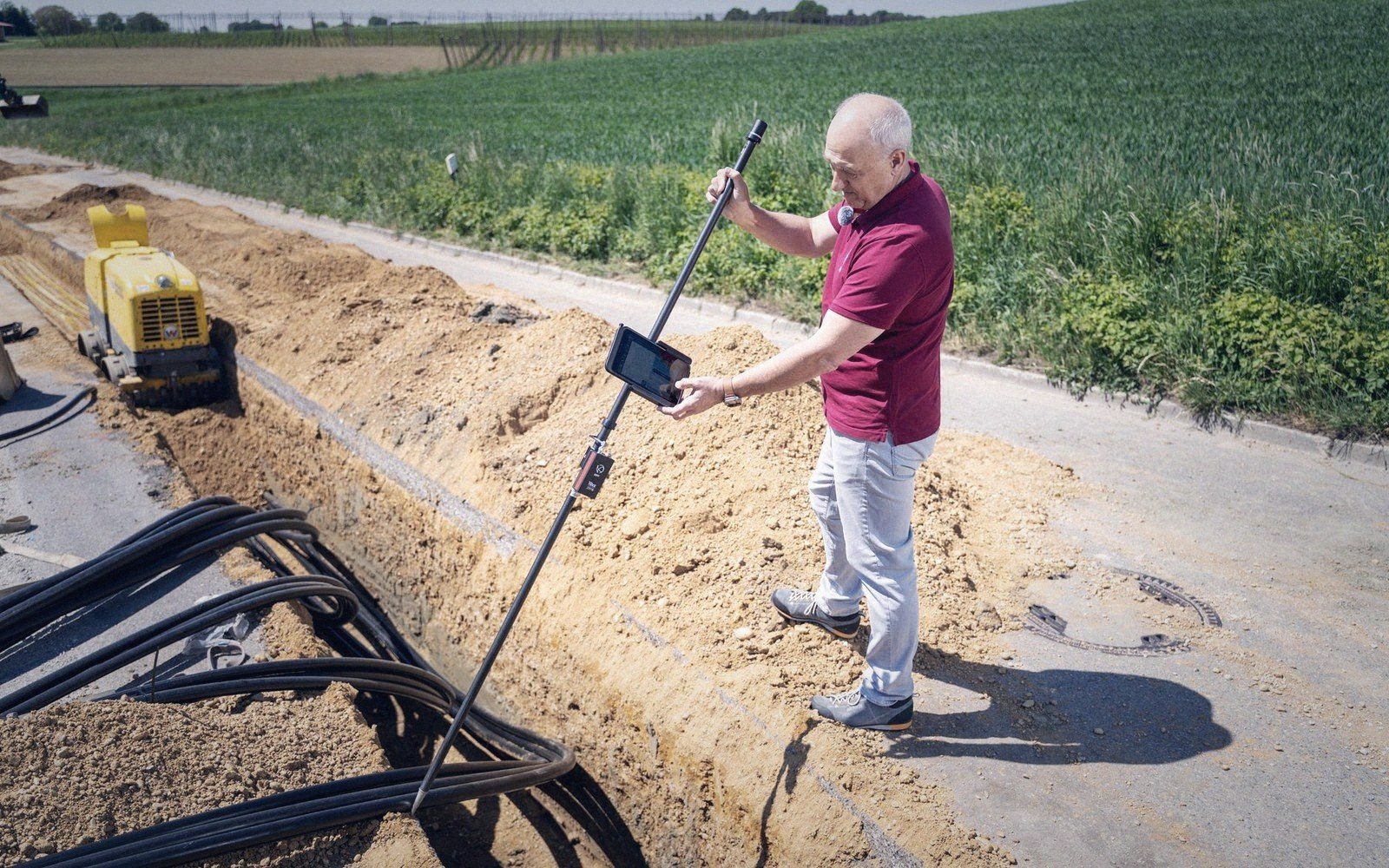
None of this is free. The coax itself may have corroded connectors, damaged shielding or inadequate ground-bonding — problems invisible under light load but catastrophic as upstream spectrum expands and ingress noise floods the new frequencies. An audit of plant condition is invariably the first step, and the findings frequently determine whether upgrade or replacement wins on cost. Pre-amplifier noise figure rises as spectrum expands; older line amplifiers simply cannot be retuned and must go.
How it works: the chain
- Headend — signal origin; connected to the internet backbone
- Optical node — converts fibre to coaxial RF signal; the key civil-work target in fibre-deep upgrades
- Amplifier cascade — active repeaters in the coax distribution run; each one adds noise and limits upstream spectrum
- Tap — passive device off the distribution cable; the point where the subscriber drop connects
- Drop — the coaxial cable from the tap to the premises; typically RG-6 or equivalent
Passive components — taps, splitters, directional couplers — have frequency response limits stamped onto them at manufacture. Pushing past 1 GHz on hardware flat-rated to 750 MHz introduces return loss and reflections that OFDM's pre-equalisation can partially compensate for but cannot overcome entirely. Certifying the plant to the new channel plan means swept-frequency measurements and records that many cable operators have never maintained systematically.
The result is a technology with genuine headroom and a deeply uneven upgrade path. Plant condition, node density and the cost of adding duct for fibre-deep runs determine whether Docsis 4.0 extends the coax asset life by another decade or simply accelerates the case for trenching into the ground and pulling glass.
Key standards milestones
- 2013 — CableLabs publishes Docsis 3.1 specification
- 2016 — first commercial Docsis 3.1 deployments begin
- 2019 — CableLabs releases Docsis 4.0 specification (later revised)
- Docsis 4.0 ESD — Extended Spectrum variant; upstream to 684 MHz, downstream to 1.8 GHz
- Docsis 4.0 FDX — Full Duplex variant; requires N+0 node architecture