Multi-dwelling buildings
One fibre enters the block. Getting it to each flat is a different job entirely.

01One drop, a dozen complications
A single-family home is hard enough. A block of flats introduces a second set of problems that sit between the street and the subscriber: who owns the riser, who has access to it, and what condition it is in when you finally get inside.
The drop to the building is straightforward in principle — one duct, one blown or pulled fibre, one entry point. But from the moment the cable crosses the threshold of a multi-dwelling unit (MDU), the installer is operating in somebody else's building, under somebody else's rules, with equipment that may need to serve residents who haven't all consented. That tension runs through every MDU deployment.
02The riser problem
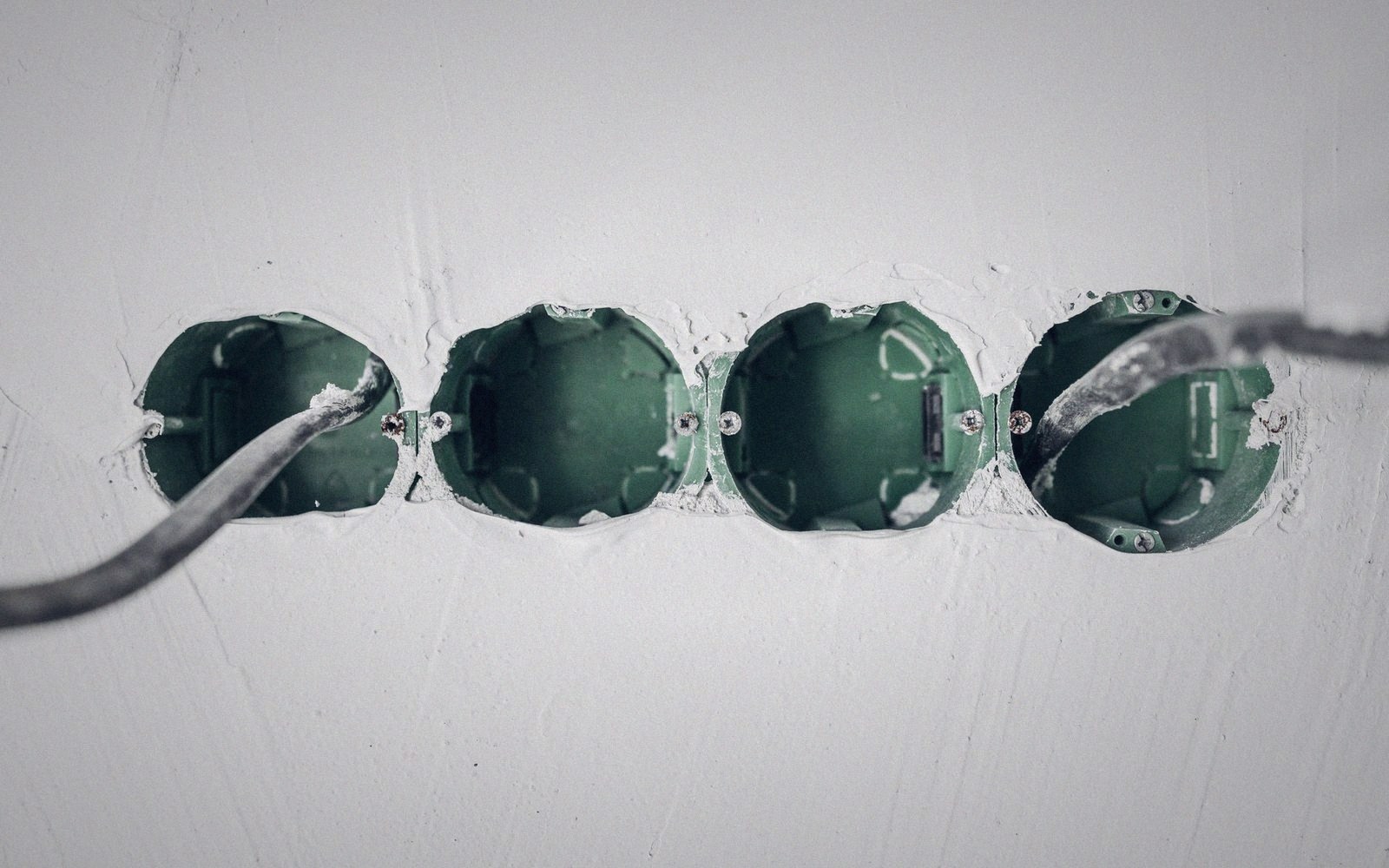
Older blocks were rarely built with fibre in mind. Telephone cables ran in whatever chaseways existed, often shared with electrical conduits or fire-stopping layers that nobody has touched since the original build. Getting fibre from the entrance point to, say, flat 14 on the fourth floor means negotiating vertical risers, horizontal distribution runs across landings, and potentially a ceiling-height cable tray that the managing agent treats as load-bearing infrastructure even when it isn't.
Access is the first barrier. Building managers, freeholders and managing agents each have different legal relationships with the riser space, and none of them are in a hurry. In England and Wales the Electronic Communications Code gives operators certain rights to install apparatus on private land, but exercising those rights over a managing agent who isn't responding takes time — and time on an MDU job is expensive because the civils are already done and the crew is standing in a lobby. The permission process that stalls a street job can repeat itself, floor by floor, in a block.
When access does materialise, the riser itself is often narrower than expected, already full, or interrupted by fire-stopping that cannot legally be pierced without re-sealing. Intumescent firestopping around penetrations is not optional; skipping it is both a building regulations failure and a liability. A competent MDU deployment builds in time to seal every penetration correctly, which adds cost that desktop planning rarely captures.
03Passive split or active distribution
Once the riser is solved, the architecture question is: where does the split happen? A single fibre from the street can be split passively at a consolidation point in the basement or ground-floor comms room, with individual fibres running to each flat. This keeps active equipment out of the building — no power, no maintenance — and aligns neatly with a PON architecture from the street.
Key decision points
- Passive split in basement vs. active distribution in riser — driven by freeholder relationship and existing cabling
- Fire-stopping penetrations — legal requirement at every floor, adds real cost and time
- Per-flat consent — distinct from building-level permission, especially in rented stock
The alternative is an active distribution point: a small managed switch or ONT aggregate in a riser cupboard, distributing via Ethernet to the flats. This makes in-building troubleshooting easier and gives each flat a clean, short copper or fibre run, but it introduces powered equipment in a space that belongs to the freeholder, who will have opinions about power supply, responsibility and access for maintenance.
Neither approach is universally right. Passive suits deployments where the freeholder wants minimal involvement; active suits buildings where the in-building cabling is already Ethernet-structured and the freeholder is an engaged partner.
This keeps active equipment out of the building — no power, no maintenance — and aligns neatly with a PON architecture from the street.
The Drop · Multi-dwelling buildings
04The flat itself
Crossing the boundary into each individual flat is a separate event — potentially dozens of them in a single building, each requiring resident cooperation, a tidy entry point, and a decision about where the termination box lands. In a rented flat, that may need landlord consent too. And once inside, where the router ends up still determines whether the subscriber actually gets useful speeds at the sofa, regardless of what the riser cost to cable.
MDU deployments are not harder because the technology is different. They are harder because the people, the permissions and the physical compartments multiply. That is the job.

| Passive split in basement vs. active distribution in riser | driven by freeholder relationship and existing cabling |
| Fire-stopping penetrations | legal requirement at every floor, adds real cost and time |
| Per-flat consent | distinct from building-level permission, especially in rented stock |