The enclosure
A joint lives underground or on a pole for decades. Sealing and strain relief matter more than the splice.
01What keeps the splice alive is not the splice
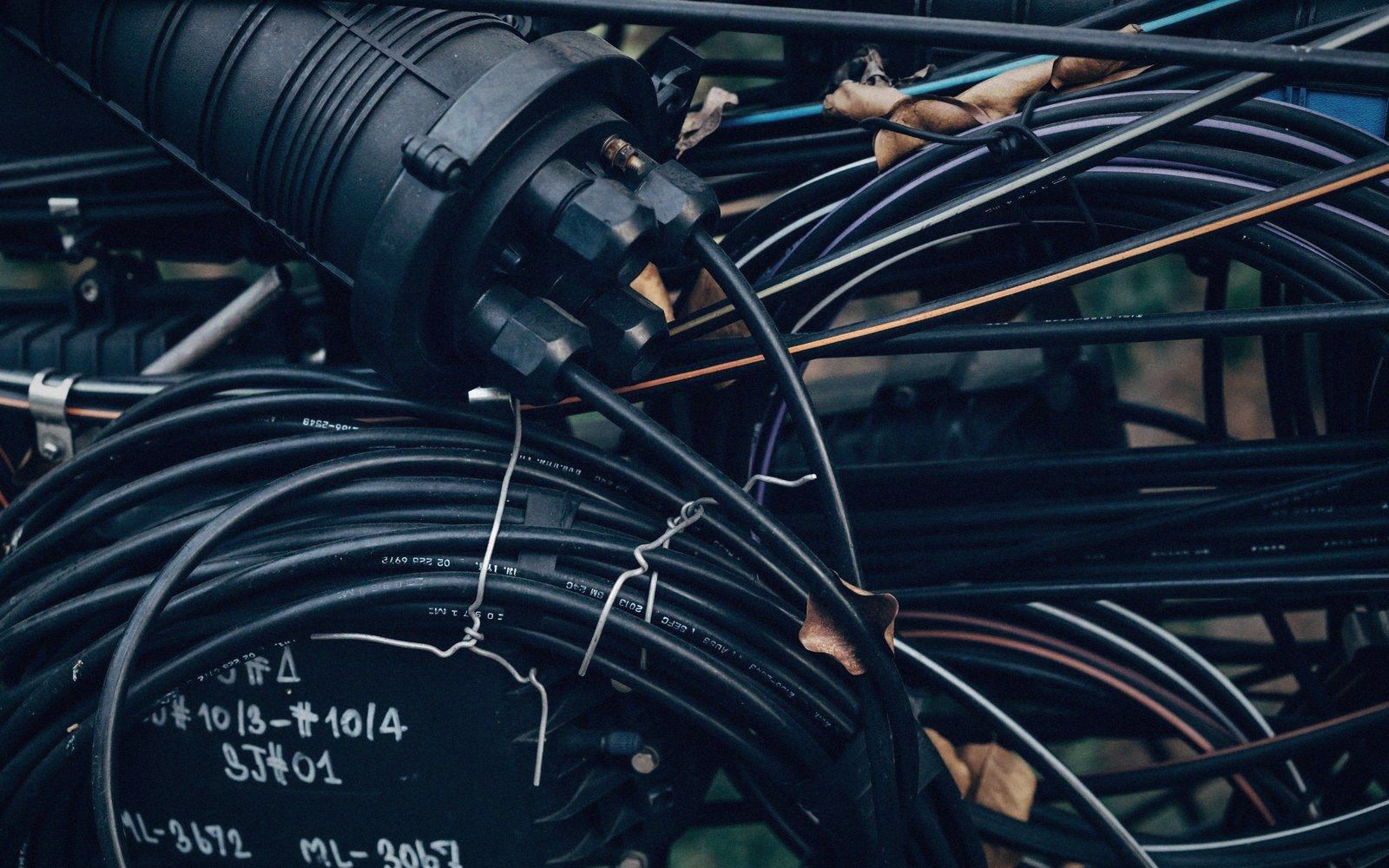
Spend enough time on a fusion splicer and the splice itself starts to feel like the whole job. The arc is clean, the estimated loss is 0.02 dB, and the protection sleeve has shrunk neatly around the joint. But the splice will last only as long as its housing, and only if the housing is chosen and installed with equal care. Most joint failures in the field trace back not to the glass but to the enclosure around it — water ingress, inadequate strain relief, a gasket disturbed during a re-entry.
A joint enclosure has one job: to hold the spliced fibres in a controlled environment, protected from mechanical stress, moisture and temperature swing, for the life of the network. That life is typically measured in decades, often underground or on a structure exposed to weather. The enclosure must survive all of it with no maintenance assumed.
02The two enclosure families
Dome closures and inline (or butt) closures are the two forms that dominate the access network. A dome closure — sometimes called a Christmas-tree closure for its shape — accepts cables from one end and suits branch points where several feeder or distribution cables meet. An inline closure accepts cables from both ends and suits a straight-through joint, a mid-span repair or a simple splice point on a point-to-point run.
Both families use broadly the same sealing philosophy: a controlled compression of an elastomeric seal against the cable jacket, combined with a mechanical body that holds everything rigid. What separates a good enclosure from a marginal one is how reliably that compression is maintained over thermal cycling. A cable entering an underground joint may see ground temperatures from just above freezing to well above 20 °C depending on burial depth and climate; an aerial joint on a black pole can swing from well below zero overnight to 60 °C surface temperature on a summer afternoon. Every expansion and contraction cycle is a small mechanical test of the seal and the cable anchor.
Strain relief is the less glamorous half of the specification, and the one most often under-specced in lighter deployments. The enclosure must anchor each cable mechanically so that any pull on the cable outside — a vehicle clip, subsidence, thermal contraction of an aerial span — does not transmit load to the splice tray or, worse, to the spliced fibre itself. Most closures achieve this with a combination of cable clamps that grip the jacket and, where the cable carries a strength member, a separate anchor point for that member. The strength member — typically Kevlar yarn in a blown-fibre unit or a steel wire in a figure-eight aerial drop — must be bonded to the enclosure body, not left floating.
Splice tray management sits between the splice and the seal in importance. Trays hold the individual fibre splices in protective sleeves and route the surplus fibre — there must always be surplus — in smooth curves that respect the fibre's minimum bend radius. A tray that allows fibre to migrate under vibration, or that is stacked so tightly that re-entry means lifting five trays to reach tray one, creates a maintenance liability that accumulates over years. The better closures use positive tray retention, numbered tray positions and enough headroom to route fibres without forcing them.
What to look for in a closure specification
- Seal type — dry elastomeric versus gel; dry re-enters cleanly, gel does not
- IP rating versus real-world re-entry performance — a rating is a starting point
- Strain relief architecture — separate anchor point for strength members is essential
- Splice tray retention and access order — tray-one accessibility matters on re-entry
- Thermal cycling range — aerial closures need a wider rating than buried ones
- Torque-controlled installation — if re-sealing requires a torque wrench, note that in the as-built record
03Entry and re-entry
A sealed enclosure that cannot be re-entered cleanly is a problem waiting to happen. Faults occur, networks grow, and the enclosure will eventually be opened. Gel-filled or grease-packed closures — common in older telephony-era plant — seal reliably on first installation but become extremely difficult to reinstate to the same integrity on re-entry. Modern access-fibre closures almost universally favour dry-seal designs: elastomeric port inserts, re-usable gaskets and mechanical compression rather than flooding compounds. The working conditions matter too: a joint opened on the verge of a road in rain needs a closure system that a technician in gloves can reseal without laboratory conditions.
Ingress protection ratings give a headline figure — IP68 for continuous submersion is common for buried joints — but the rating reflects a clean, controlled installation. Real performance over decades depends on whether the installer followed the torque sequence, did not nick the gasket, and seated the cable entry correctly. The enclosure design can make the right outcome easy or hard to achieve. That is the specification question worth asking before the order goes in.
| First decade | most likely: cable pull transferring to tray if strain relief was under-specified |
| Second decade | most likely: seal degradation from thermal cycling, especially on aerial joints |
| On re-entry at any age | most likely: gasket disturbance if gel-sealed or if torque sequence is not documented |