Duct you already have
Existing conduit — telecom, power, sewer, highway drainage — is the cheapest route in the ground. The catch is that "existing" and "usable" are not the same word.
01What might already be there
Before a contractor lifts a single kerb stone, most network planners now run a desk study against utility records: telecoms ducts from the old incumbent network, electricity conduit, water-authority subducts, even disused gas sleeves. Highway authorities often have their own drainage runs that happen to follow a useful alignment. The breadth of potentially reusable infrastructure is surprising — the frustration is that the records were compiled over decades by organisations with different standards, different coordinate systems, and, in several memorable cases, no records at all beyond a hand-drawn sketch on paper that has since been scanned into a PDF no-one can locate.
Where records are good, reuse transforms the economics. No trenching permit, no reinstatement bond, no lane closure traffic management, no waiting on a highways inspector to sign off the surface. A blown-fibre installation into an already-mapped, correctly-sized duct can proceed at a pace that makes micro-trenching look slow. The fibre goes in; the disruption is almost nothing.
02The gap between paper and reality
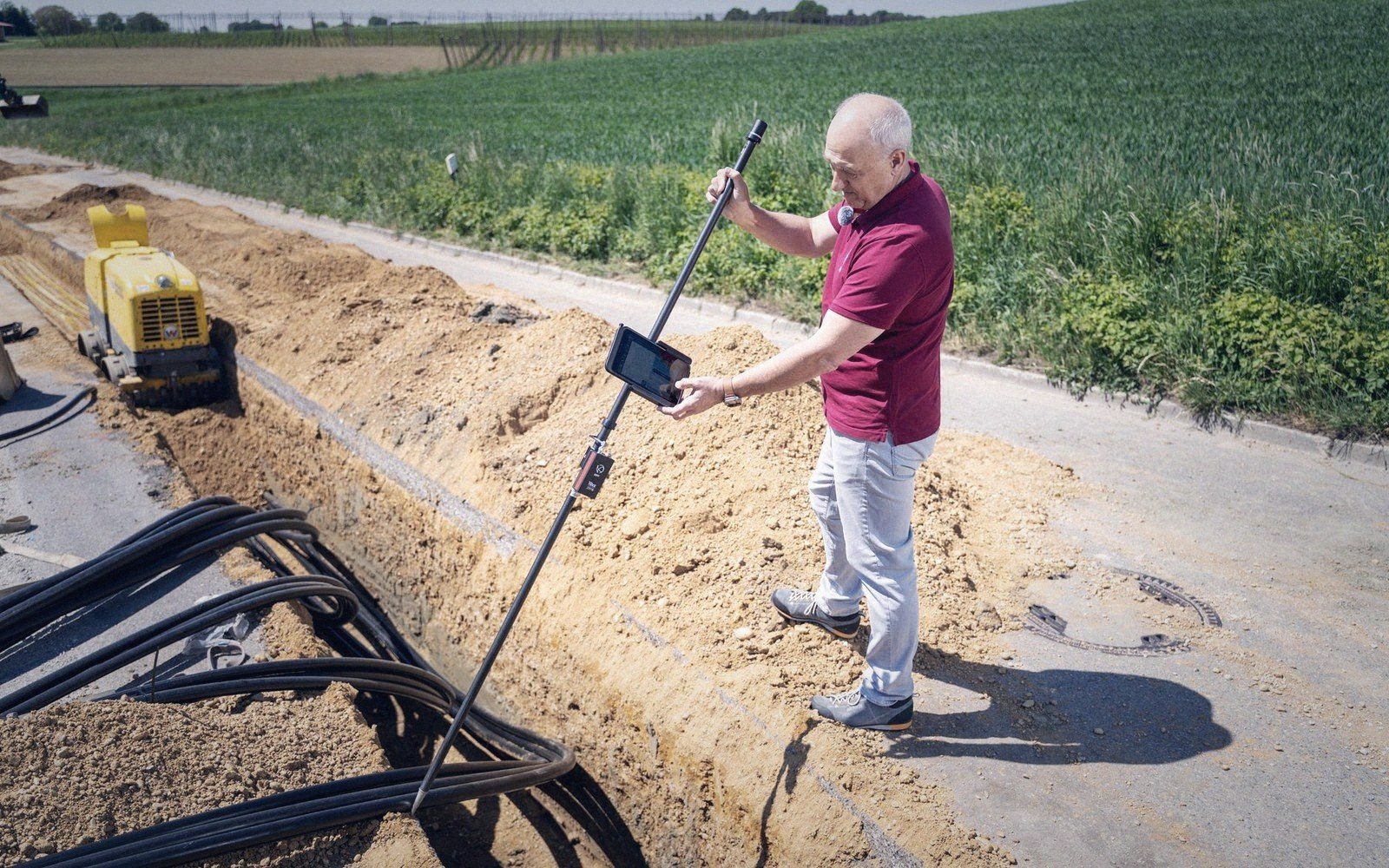
The problem is that ducts age. A conduit shown as clear on a drawing is often blocked by root ingress, collapsed by ground movement, sealed by a previous contractor who poured grout rather than a proper end-cap, or simply occupied by something that postdates the drawing. A rod-and-rope test settles the question in minutes, but it has to be done — assuming anything about inherited infrastructure is how survey costs become emergency civil works.
Duct diameter matters too. Legacy telecoms infrastructure was sized for copper pairs or coaxial cable; getting a modern microduct bundle through a duct that is nominally available but physically undersized requires either a smaller-diameter solution or a liner, which adds cost and reduces the clear bore further. Sub-duct installation into a larger host duct is a cleaner answer where the host has room, and it lets multiple operators share the same run without fibres touching — a detail that becomes commercially and legally relevant when wayleaves or access agreements govern the host asset.
Occupation by another party is a different constraint entirely. A duct owned by an incumbent and let to one ISP may or may not be available to a second, depending on the regulatory regime in that country and whether open-access obligations apply. In markets with strong duct-access regulation, the incumbent is required to offer competitors access at a published reference rate; in others, it is a bilateral negotiation with no guaranteed outcome and a timeline that can extend a project by months.
Sewer and drainage infrastructure introduces a separate set of variables: structural condition surveys become necessary, the owner is usually a water or highways authority rather than a telecoms body, and agreements may require specialist installation methods — self-propelled crawlers for inspection, purpose-built conduit clipped to the crown of the sewer — rather than simple blowing. The technique is established and working in several European cities, but it is not a shortcut that removes complexity; it relocates the complexity into a different set of permissions and disciplines.
The gap between record and reality
- Rod-and-rope test — physical probe to verify a duct is clear and unobstructed before committing to a route
- Root ingress — plant roots entering through joints, the most common cause of blockage in older conduit
- Sub-duct — smaller conduit installed inside a larger host duct to carry fibre and isolate it from other users
- Liner — a flexible tube inserted to restore a collapsed or undersized duct bore; reduces the usable diameter further
- Grout blockage — legacy closure method where contractors poured cement into a duct end rather than fitting a proper cap
03Making the asset work
The practical discipline is treating duct reuse as its own project phase rather than an assumption. Commission the desktop study early, cross-reference against multiple utility databases, then physically prove every section before committing a route to design. Where a section fails, plan the civil bypass before mobilisation rather than on the day. The contingency budget for unexpected blockages should be explicit, because in practice a route that is eighty percent reusable still requires twenty percent new trench — and that twenty percent usually falls in the worst locations.
Duct you already have is a genuine asset. It becomes a liability only when its condition is treated as someone else's problem to discover later. The asset register, honestly interrogated, is where the project starts and where the cost model either holds or falls apart.
Project discipline checklist
- Desktop study first — cross-reference multiple utility databases before any site visit
- Physical prove-out — rod every section before the route is locked into design
- Contingency for civil bypass — budget explicitly for sections that fail the rod test
- Occupation check — confirm regulatory and contractual status before assuming access is available
- Sewer/drainage pathway — requires structural survey, specialist installation, separate authority permissions