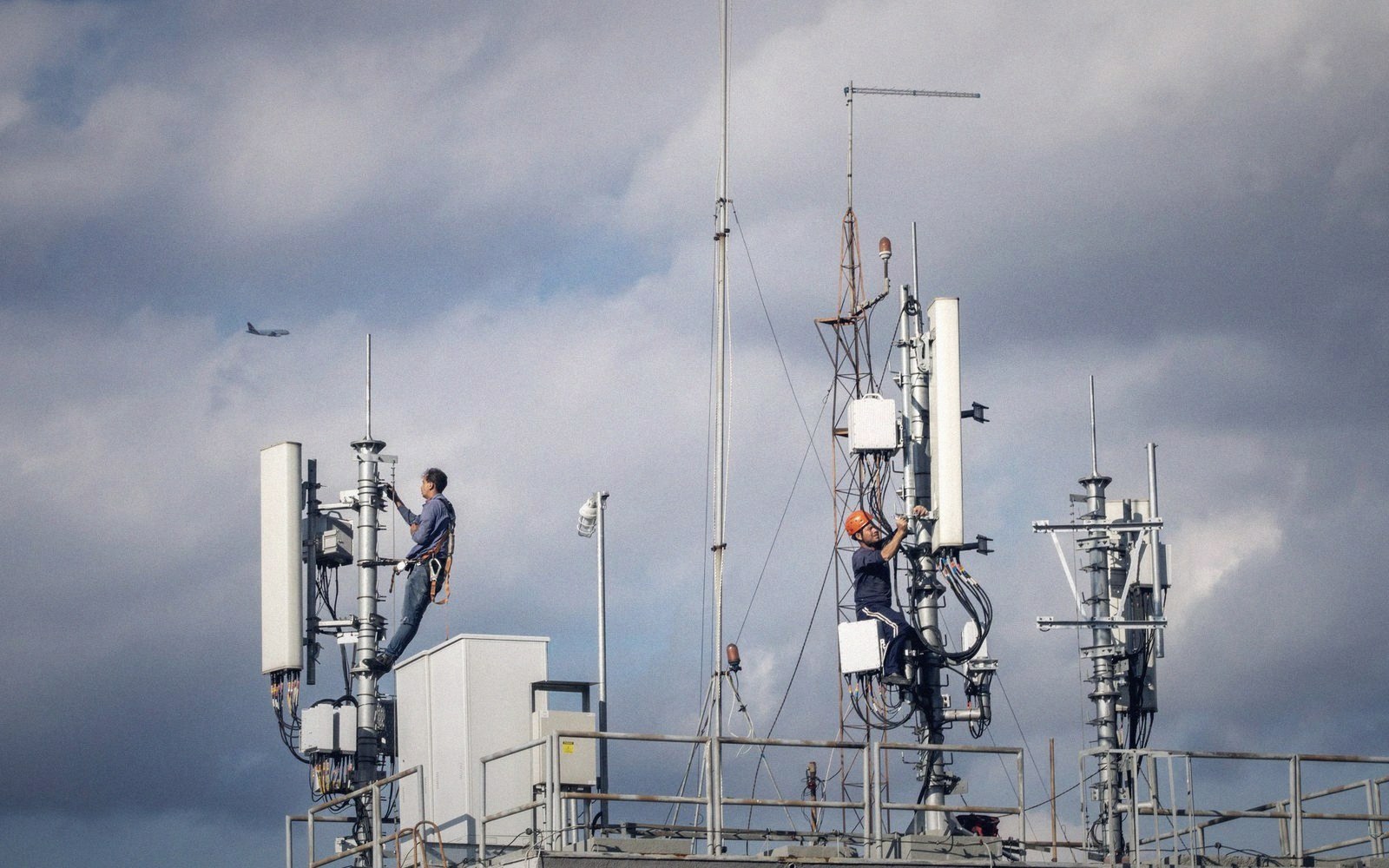
Poles
Overhead is fast and cheap and visible, and the objection is nearly always visual.
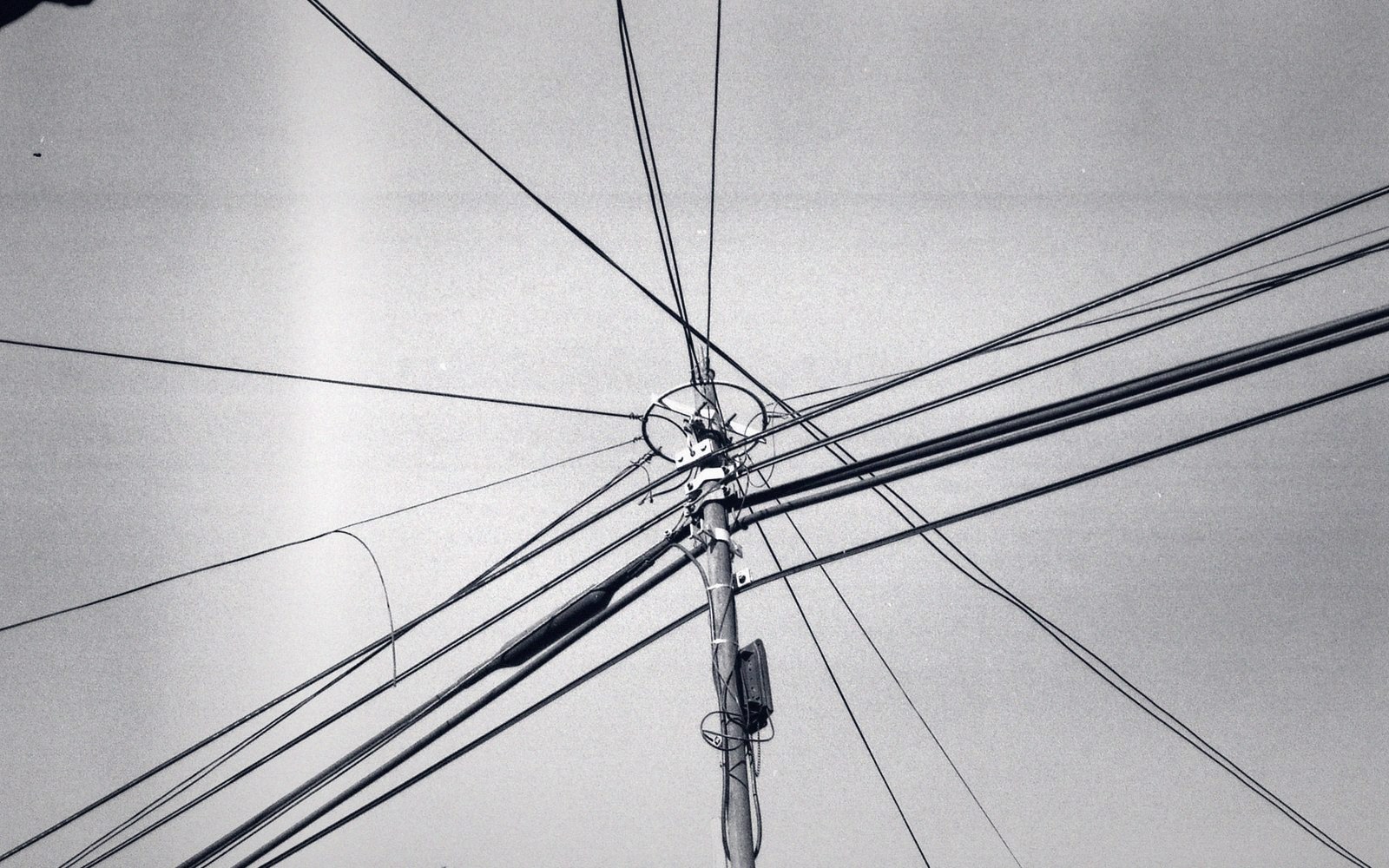
01Stringing wire through the air is quick, cheap, and contested
Overhead distribution is one of the oldest tricks in access networking, and it still works. A wooden pole, a lashing wire, and a figure-eight aerial cable can carry fibre past a hundred homes in the time it takes a trenching crew to cross a single front garden. The economics are unambiguous: no excavation, no reinstatement, no wayleave negotiations for every metre of carriageway. Where the poles already exist — shared with power utilities, street lighting or legacy telecoms — the civil cost can fall close to zero. Where new poles must be planted, the saving over open trenching is still substantial.
02How an aerial route is built
The structure is simple. A steel messenger wire or integral strength member carries the mechanical load between pole attachment points; the fibre cable hangs from it, either lashed continuously or factory-attached in a figure-eight profile. Span lengths between poles typically run 30–60 metres in residential streets, constrained by sag, wind load and the clearance requirements set by national electrical safety codes. In the United Kingdom, for instance, the Electricity Safety, Quality and Continuity Regulations specify minimum separation between power conductors and communications cables, and the network owner must demonstrate compliance on every span.
Where it works and where it doesn't
- Rural and low-density suburban builds — the natural territory; civil costs are high, homes are sparse
- Small island communities, farmsteads, scattered hamlets — speed advantage is most pronounced
- Conservation zones and dense urban streets — planning and community resistance frequently block it
- Interim deployment — aerial fibre can activate customers ahead of a planned underground build
At each pole, the cable is anchored with a dead-end clamp before continuing, so a mechanical failure at one attachment does not cascade along the route. Joints and splices live in enclosures clamped to the pole itself or, on longer runs, in pedestals at the base. Terminals serving individual properties drop away as short figure-eight tails to a bracket on the building facade, then enter through a small external wall entry point. The drop itself — that final few metres from pole to property — is the segment most exposed to branch contact, ladder strikes and the occasional misguided lorry, and it is where most aerial network faults originate.
03Where it wins and where it doesn't
Rural and low-density suburban builds are the natural territory for aerial routes. Road-verge trenching in these areas is expensive relative to the homes passed; rock, chalk and tree roots make every metre unpredictable; and traffic management costs on rural A-roads can dwarf the cable itself. An aerial route bypasses most of that. Small island communities, farmsteads linked by a single lane, and scattered hamlets that would otherwise wait years for civil-based deployment all benefit from the speed advantage.
The technology also lends itself to rapid interim deployment. An operator can string aerial fibre ahead of a planned underground build, activate customers, and recover the cable later — or simply leave it. Networks in parts of rural France, Portugal and across much of North America have operated aerial fibre routes continuously for decades without material degradation, provided the attachment hardware is correctly specified and inspected periodically.
The ceiling is visual and political. In dense urban areas and conservation zones, planning authorities routinely refuse overhead communications infrastructure, and even where approval is technically possible, community resistance delays projects that a trench might have delivered quietly. The problem is compounded in streets with existing overhead clutter: a new lashing wire on an already-burdened pole adds to an aesthetic that local authorities are often actively trying to reduce. Some jurisdictions have blanket prohibitions. Others require case-by-case consent for every pole or every span, which erodes the speed advantage quickly.
Shared infrastructure helps. Attaching to utility poles under a pole-sharing or make-ready agreement shifts the structural question to a party already managing the asset, and keeps the street furniture count flat. Make-ready — the work needed to create safe capacity on a pole before a new attachment can be made — is a real cost and a real delay, sometimes several months in markets where the pole owner's processes are slow. That negotiation, not the cable itself, is usually the critical path.
Wind, ice loading and solar creep affect sag over the life of a route, and inspection regimes need to account for it. Fibre itself is indifferent to the environment; the attachment hardware and the messenger wire are not. Stainless steel hardware outlasts galvanised on coastal routes, at a modest premium that is always worth paying.
An operator can string aerial fibre ahead of a planned underground build, activate customers, and recover the cable later — or simply leave it.
Route · Poles
Overhead is fast, cheap, and unmistakably present. In the right geography, with the right permissions, it is frequently the correct choice. The objection is almost never technical.
Key construction details
- Span length: typically 30–60 metres between poles, constrained by sag, wind load and electrical safety clearance
- Messenger wire or integral strength member carries load; fibre hangs lashed or in factory-bonded figure-eight profile
- Dead-end clamps at each pole isolate mechanical failures to a single span
- Coastal routes: stainless steel hardware over galvanised for corrosion resistance
- Most faults originate at the drop — the last few metres from pole to building