Where the router goes
Usually where the socket is, which is usually the worst place in the building.
01The socket wins, and the socket is wrong
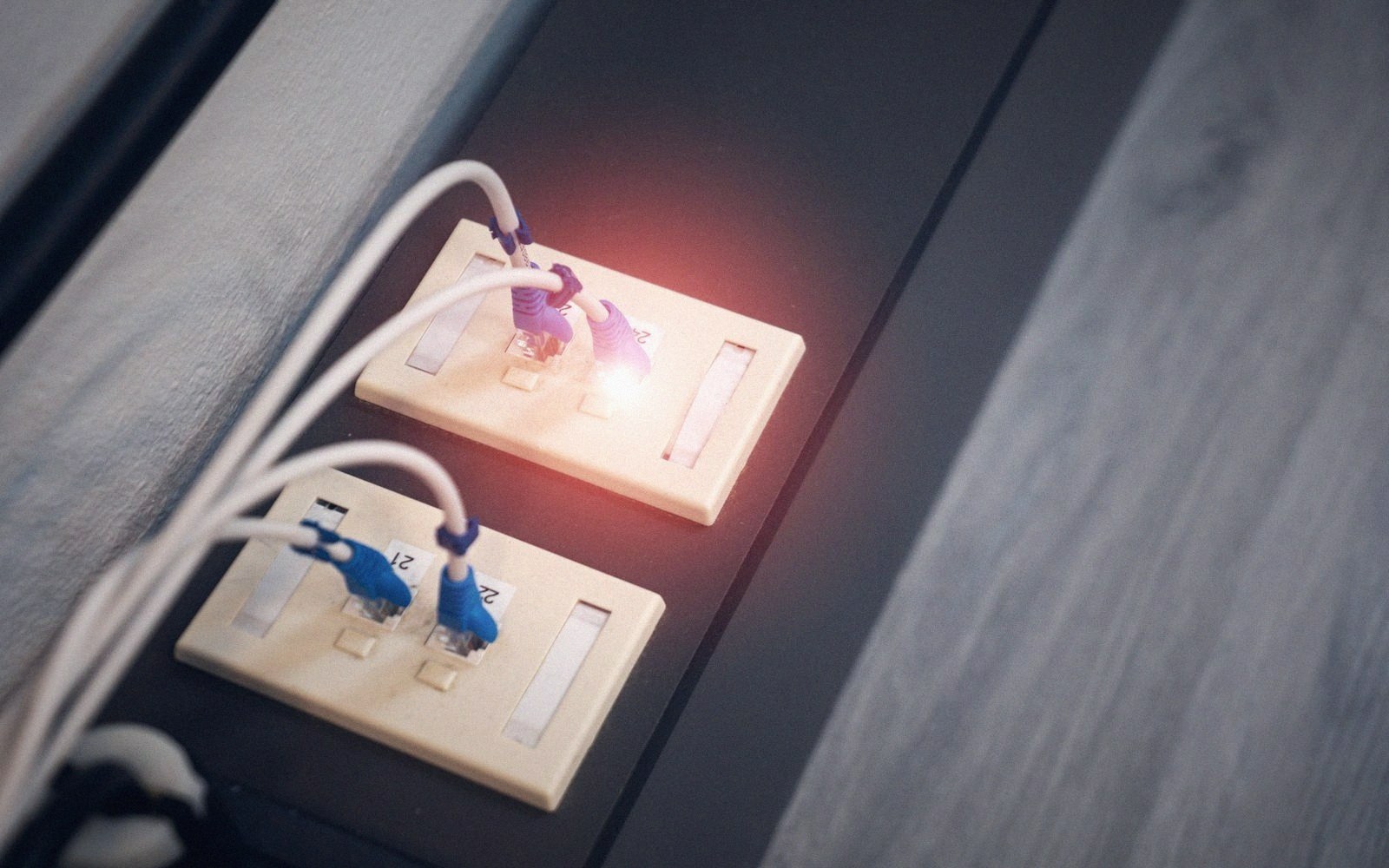
The router goes where the network termination point is. The network termination point is where the installer put the socket. The installer put the socket where the previous one was — which is where the cable entered the building decades ago, which is usually a downstairs corner beside the front door, behind a coat rack, inside a cupboard, or at the base of a wall that was convenient in 1985.
That location was chosen for a copper telephone line. It is nearly always the worst possible position for a wireless access point radiating in all directions: close to an exterior wall, low to the floor, surrounded by plaster and brick on three sides, with the entire building's floor area in front of it and a path to the street behind it.
The physics are unforgiving. A 5 GHz signal loses meaningful range through a single interior partition. Put the router in a cupboard and you have added another 5–10 dB of attenuation before the signal reaches the hallway. Two walls between the router and the far bedroom is often enough to drop a connection from reliable to marginal, regardless of what the headline broadband speed is.
The practical fix is almost never where people look. Changing router hardware helps less than moving the existing one. A long ethernet run — even a single Cat 5e cable fished through the ceiling — that repositions a wireless access point to a central hallway or landing transforms coverage more reliably than any antenna upgrade. Structured cabling done at build or refurbishment is the durable answer; a mesh node on a dedicated backhaul link is the retrofit one.
Installers do not always have authority to relocate the termination point, and residents do not always want cable runs on show. The result is a gigabit service delivering wireless that struggles to cover a two-bedroom flat — not because the technology failed, but because the socket never moved.
The real constraint
- Network termination point — the socket where the ISP's responsibility ends and the resident's begins; its position is usually inherited from the previous technology
- 5 GHz band — higher throughput, shorter range, more affected by walls than 2.4 GHz
- Attenuation through partition — each interior wall typically adds 5–10 dB signal loss; a cupboard door adds more
- Cat 5e — the minimum structured cabling standard still adequate for gigabit ethernet over short in-building runs

| Network termination point | the socket where the ISP's responsibility ends and the resident's begins; its position is usually inherited from the previous technology |
| 5 GHz band | higher throughput, shorter range, more affected by walls than 2.4 GHz |
| Attenuation through partition | each interior wall typically adds 5–10 dB signal loss; a cupboard door adds more |
| Cat 5e | the minimum structured cabling standard still adequate for gigabit ethernet over short in-building runs |