The last hundred metres
Where the money actually goes in a fibre build — and why none of the options is obviously right.
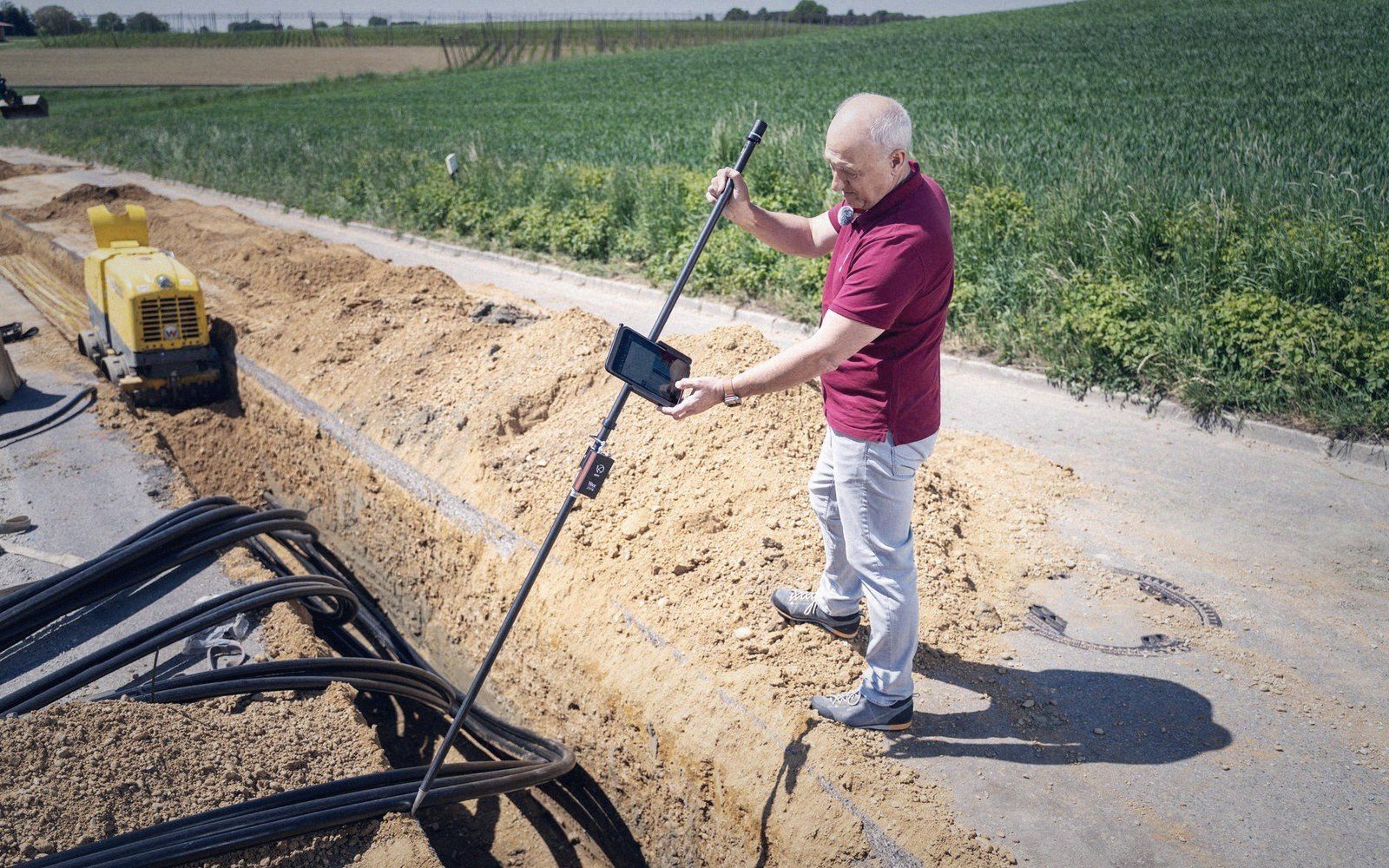
The economics of access networks do not distribute evenly. A fibre from a data centre to a street cabinet might cross hundreds of kilometres, yet its cost per connected home is modest — the capacity is shared across so many premises that the per-unit arithmetic stays manageable. The last hundred metres — from the distribution point to the boundary wall — is shared by nobody. Every metre of trench, every pole attachment, every wayleave negotiation is attributed to a handful of addresses, sometimes just one. That is why the cost of an access network is overwhelmingly the cost of the street, not the cost of the backhaul.
Quantifying this precisely is difficult without site data, but experienced build teams generally find that the civils — the physical work of getting fibre to a property boundary — account for the majority of capital expenditure on a greenfield street build. Equipment costs have fallen steadily; ground costs have not.
01Four routes, four trade-offs
Trenching is the canonical method and remains the most durable. A narrow open trench, typically around 300 mm deep in a verge and deeper under carriageway, accepts a duct that will carry fibre — and, if you plan ahead, spare ducts for future infrastructure. Reinstatement done properly lasts decades. The problem is disruption: road closures, statutory notices, lane rental charges in jurisdictions that levy them, and reinstatement standards that vary dramatically between highway authorities. On a quiet residential street with a wide grass verge, open trenching is often the fastest route to a long-lived network. On a busy urban road with narrow footways and a buried archaeology of Victorian gas mains, it becomes an exercise in delay management. Speed depends almost entirely on what the spade hits, not what the specification says.
The argument for reusing duct you already have needs little elaboration: if a telecoms operator, utility or local authority has already paid to open the ground and install a duct, the marginal cost of threading a microduct and blowing fibre through it is dramatically lower than starting from scratch. The problem is availability. Duct records are incomplete, bore sizes do not always accommodate modern microducts without lining, and ownership is fragmented. Where it exists and is accessible, it is transformative. Where it does not, romanticising it is a distraction.
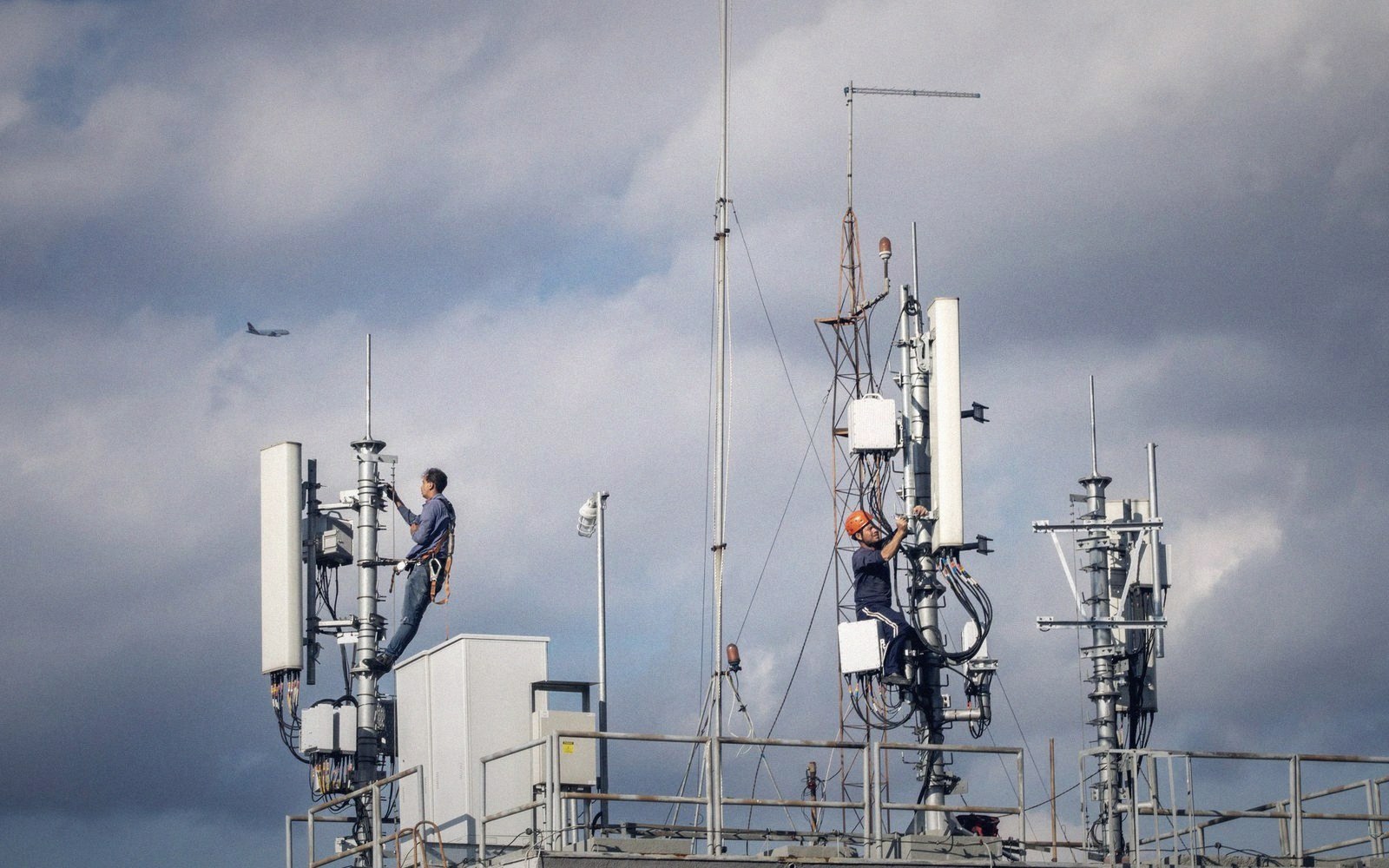
Aerial routes — fibre lashed to a messenger wire between poles — trade the ground problem for a visibility problem. The capital cost is lower than open trenching; the deployment speed is high; no road closure is needed. Pole attachments require permission from whoever owns the poles, which introduces a negotiation and a lead time, but the conversation is generally with a single party rather than a highway authority. The objections, when they come, are almost always aesthetic. In rural and semi-rural areas, where poles already carry copper or power conductors, adding a fibre strand changes little about what a street looks like. In a conservation area or a street of listed buildings, the same attachment faces a different reception entirely.
Micro-trenching — cutting a slot typically 50 to 80 mm wide and 100 to 150 mm deep into an existing road surface, laying a microduct, and reinstating — emerged as an urban compromise: less disruption than open trenching, faster progress, lower cost. The weakness is longevity. A reinstatement that narrow in a carriageway surface is under cyclic load from the day it cures, and the service life of the slot varies enormously with surfacing quality and traffic loading. Highway authorities disagree substantially about whether to permit it, and the requirements where it is permitted differ enough to make it difficult to standardise a build programme across authority boundaries. It is a tool worth having; it is not a universal answer.
Build method comparison
- Open trenching — most durable, highest disruption, highest civils cost; suits verges and low-traffic streets
- Existing duct reuse — lowest marginal cost where available; availability is the constraint
- Aerial on poles — fast deployment, no carriageway closure, permission-dependent, aesthetic objection risk
- Micro-trenching — reduced disruption vs open trench, lower depth and width, longevity variable, authority acceptance inconsistent
02The boundary and beyond
These four methods — trenching, existing duct, aerial, micro-trench — all terminate at roughly the same point: the property boundary, or close to it. What happens across that boundary is a separate set of decisions, with its own permissions, its own costs, and its own failure modes. The crossing from the street into the building is frequently underestimated during planning. It is the step most likely to convert a one-hour job into a half-day negotiation, particularly in older properties where the route is unclear, the occupant is absent or the landlord's consent is required.
The total cost of the last hundred metres is therefore not simply the cost of whichever street method is chosen — it is that cost plus the boundary crossing, plus the drop cable and any external hardware, plus the project management overhead of chasing permissions that were assumed rather than confirmed. Build programmes that treat the street as the only variable and the boundary as a constant are routinely surprised.
A reinstatement that narrow in a carriageway surface is under cyclic load from the day it cures, and the service life of the slot varies enormously with surfacing quality and traffic loading.
Route · The last hundred metres
03Planning as the real discipline
The decision between methods is rarely made on technical grounds alone. A build programme large enough to warrant analysis will typically have streets suited to each method, and the discipline is in correctly identifying which is which before mobilisation rather than adapting under cost pressure after it. Soil type, existing duct inventory, pole availability, highway authority permitting culture, conservation designations, tree root zones, and the density of premises to be served all feed into the method mix. On a long street with thirty houses and a usable verge, open trenching with multiple spare ducts installed simultaneously is almost always the right decision — the incremental cost of spare capacity is small, and you will want it. On a short spur with three properties connecting off an already-ducted spine, it is a different sum entirely.
What does not change is the fundamental economics: backhaul per home is cheap because it is shared; the drop per home is expensive because it is not. Every technique that reduces the cost of the street section — reusing duct, going aerial, micro-trenching where the authority permits it — improves the business case for serving premises that would otherwise sit outside the viable threshold. The margins in an access network are thin and the civils are where they are won or lost. No amount of clever passive architecture or efficient splitter placement recovers the cost of an unexpectedly difficult street.

Where cost concentrates
- Backhaul — low per-home because capacity is shared across many premises
- Street civils — majority of capital expenditure on a typical residential build
- Boundary crossing — frequently underestimated; the step most likely to cause delay overrun
- Permissions — not a line item in many plans; can dominate programme timelines in practice