The wall box
The network ends at the box on the wall. Everything beyond it is the customer's problem — legally, practically, and often frustratingly.
01Where liability stops
The optical network termination — ONT, or sometimes called a network termination point — is the physical boundary between the operator's infrastructure and the subscriber's premises. Mount it on an external or internal wall, connect the incoming drop fibre to one side, and hand an Ethernet port to the customer on the other. That box is where the service-level agreement ends and where support calls begin to get complicated.
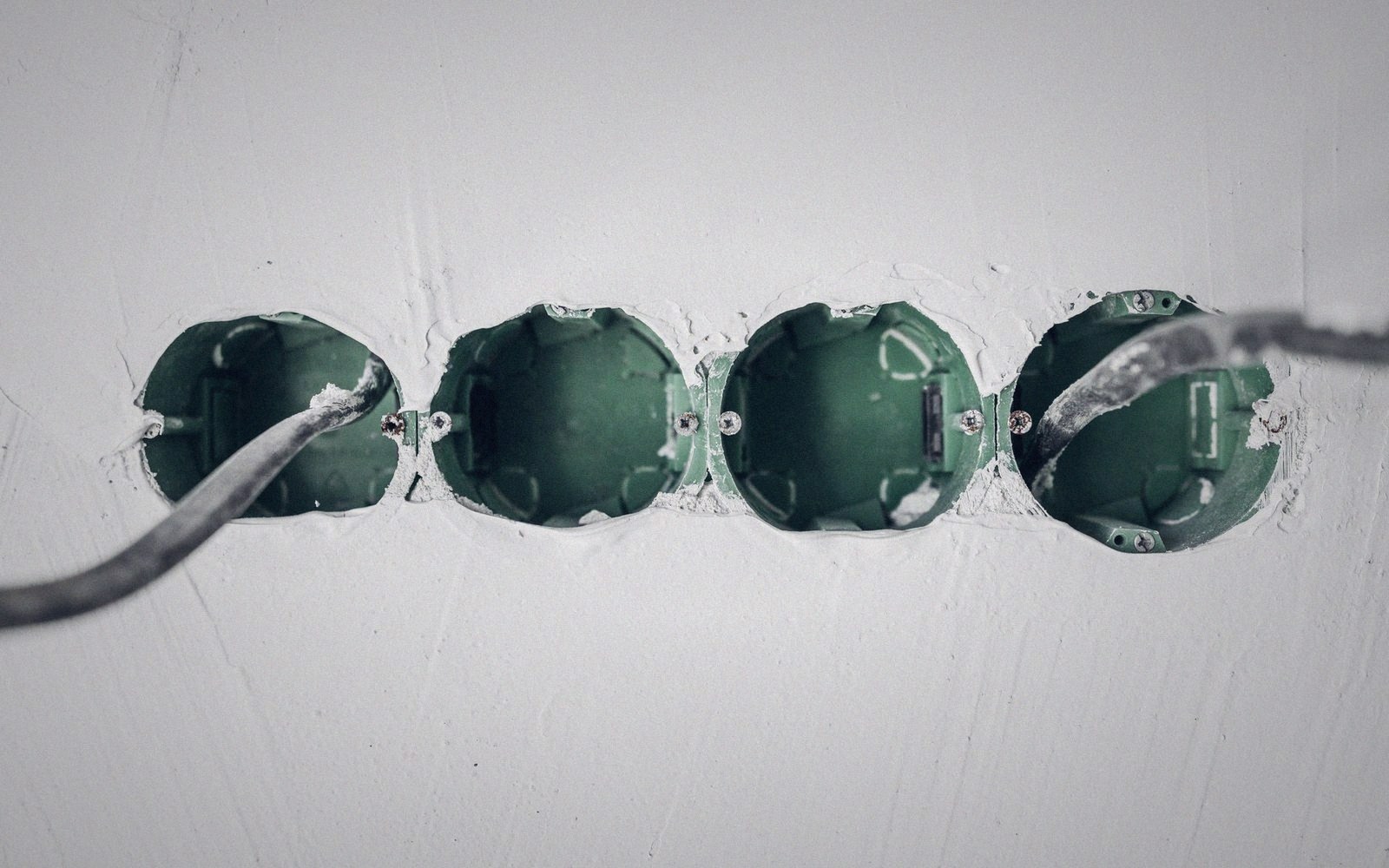
The location matters for several reasons at once. Physically, it needs to be close enough to the drop entry point that the fibre tail isn't bent around corners or stuffed into cavities in ways that introduce loss. Electrically, it needs a mains supply — ONTs are active devices — which means a socket within reach, or a short cable run that someone has to provision and someone has to pay for. Thermally, it cannot live in a cupboard that regularly hits 40 °C or in an outhouse exposed to frost, because the operating range printed in the datasheet is not a suggestion.
Outdoors mounting is possible and sometimes preferred: it keeps the operator's equipment accessible without entering the property, it keeps fibre and copper entirely separate at the boundary, and it sidesteps the argument about who owns the internal tail. The penalty is that outdoor-rated ONTs are bulkier, cost more, and still need power routed from inside — which tends to provoke the same access discussion the outdoor mount was supposed to avoid.
Indoors, the usual compromise is a small enclosure on an internal wall close to where the fibre enters, with a short patch lead to a router nearby. This works well in a house where the entry point is a utility room or hallway cupboard. In a flat, crossing the boundary may deposit the ONT in the only logical position — which is also the worst position for a wireless router to sit, because it is behind a concrete wall from everywhere useful.
None of this is difficult engineering. The box is simple. What makes it complicated is that it sits at the junction of three different questions — civil access, electrical supply, and responsibility for what comes next — and those questions belong to three different people who are not always in the room at the same time.
What the box actually is
- ONT (optical network termination) — active device converting optical signal to Ethernet; the operator's final piece of equipment
- Network termination point — the contractual and physical boundary of the operator's network
- Outdoor-rated ONT — weatherproofed variant; accessible without property entry, but larger and more expensive
| Mains power required | ONTs are active; a nearby socket or dedicated spur is non-negotiable |
| Temperature limits | indoor and outdoor ONTs have rated ranges; unventilated cupboards and unheated outbuildings both cause problems |
| Bend radius at entry | the fibre tail between drop entry and ONT must have no tight corners |